

A mortgage pre-approval is a letter from a lender that says how much it is generally willing to lend you, based on what it has checked so far. It is not a guaranteed loan. At our Crown Point shop we ask buyers to get one before the first tour. It sets a real price ceiling for you, and it tells a seller your financing is serious.
We’re the shop on South Main in Crown Point. Love Thy Neighbor. Call (219) 801-0432.
This is the Suite B walk-through of pre-approval for buyers in Crown Point and the Northwest Indiana towns we work. We cover what the letter means, what to bring to the lender, when to get it, and how we use it when you write an offer. Your lender sets the terms. We help you read them and plan around them. When you are ready to look, search homes on Realest.com. It has search and sold homes for Indiana and Illinois.
Start the buyer path on Buy. The wider shelf is on Learn: Buying and Learn: Financing. Short questions go to Ask Realest. For the living-there guide, read Real Estate USA’s Moving to Crown Point, Indiana. For the question many buyers ask first, Real Estate USA has Should I get pre-approved before I tour homes in Northwest Indiana? This post is the shop process. That one is the explainer.
What a pre-approval letter means at Suite B
The Consumer Financial Protection Bureau puts it plainly. Prequalification and preapproval letters both state how much a lender is willing to lend you, up to a certain amount and based on certain assumptions. Neither one is a guaranteed loan offer. Lenders also use the two words differently. Some call a letter based on numbers you reported a prequalification and save the word preapproval for numbers they verified. Read the CFPB’s answer on the difference between a prequalification and a preapproval letter.
So at Suite B we do not argue about the word. We ask one question. Did the lender look at your pay stubs, your bank statements, and your credit, or did it take your word for it? A letter built on verified documents carries more weight with a seller. It also gives you fewer surprises after the offer is accepted.
What the letter is: a lender’s written read on your file, with a top loan amount, a loan type, and an expiration date.
What it leaves out: a promise of a rate, a final approval, or proof that the house will appraise. The appraisal and the underwriter’s final review still come after the offer. Our From Accepted Offer to Closing page walks that stretch.
We will not invent a Crown Point “typical pre-approval amount” or a typical rate. Your number comes from your income, your debts, your credit, and your down payment. Rates move. Your lender’s Loan Estimate is the document that puts your real costs on paper.
How it usually goes at the Suite B table
A buyer comes in on a weeknight with a list of streets and a phone full of saved homes. The first thing Pam or Sash asks is who your lender is and whether you have a letter yet. If the answer is no, we pause the tour talk. Touring a home you cannot finance is a hard way to spend a Saturday, and it is harder when you love the house.
If the answer is yes, we read the letter together. What is the top amount? What loan type is it? Does it list a down payment? When does it expire? Then we ask about the payment, not the price. The letter tells you what a lender will lend. Only you know what monthly number lets you sleep. We would rather you tour at the payment you are comfortable with than at the ceiling.
What to bring to the lender
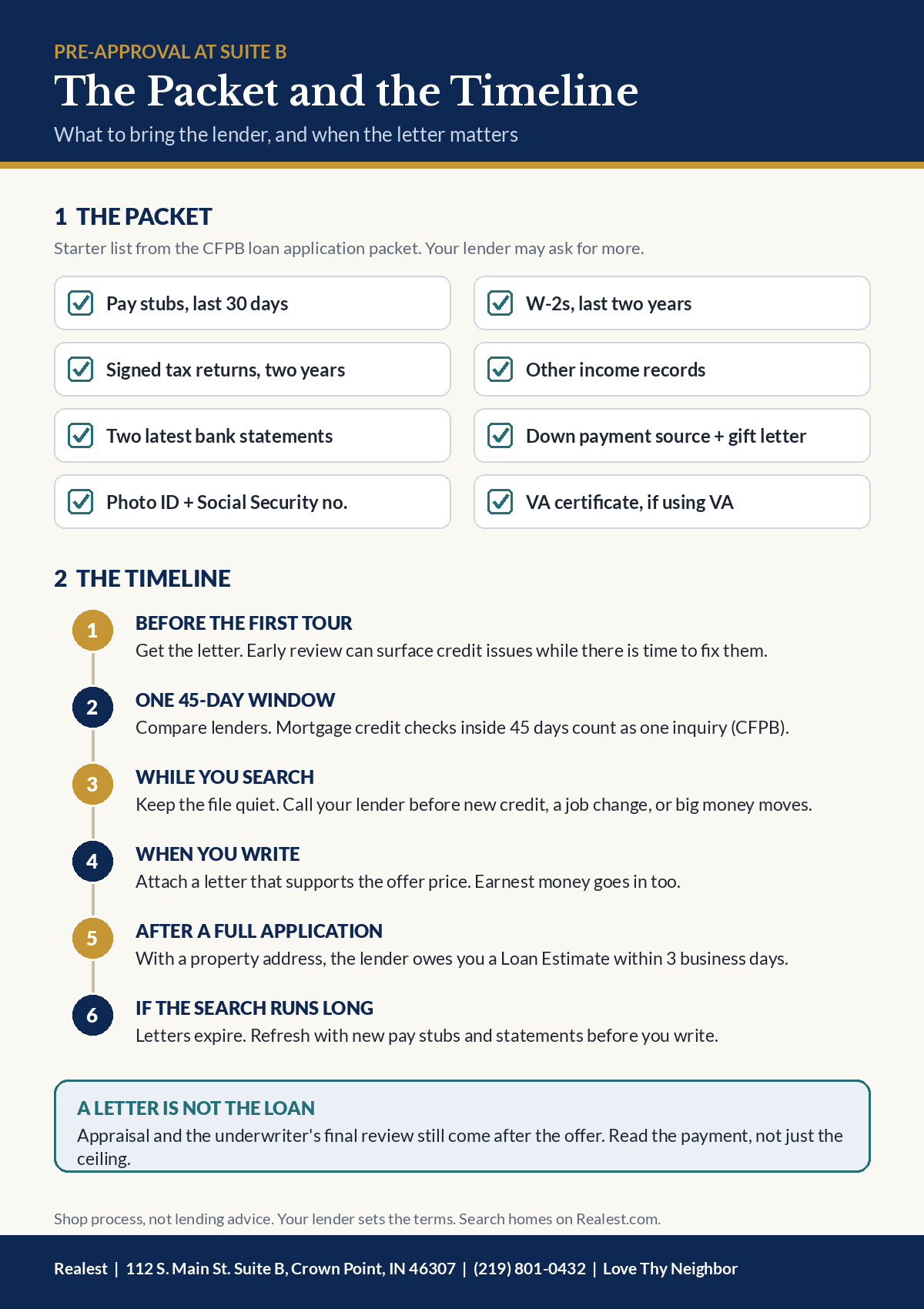
Lenders set their own lists, and self-employed buyers usually need more. The CFPB’s loan application packet checklist is a good place to start. It includes:
- Pay stubs for the last 30 days
- W-2 forms for the last two years
- Signed federal tax returns for the last two years
- Records of any other income
- Your two most recent bank statements
- Proof of where the down payment comes from, including a signed gift letter if family is helping
- A photo ID and your Social Security number
- A VA certificate of eligibility if you plan to use a VA loan
The CFPB also notes that you will likely need to update the packet at least once, because lenders want the most recent statements and pay stubs. Keep a folder. It saves a scramble when the lender asks again during the offer.
Still sorting the down payment? Read our down payment answer and Real Estate USA’s How much down payment do I need in Northwest Indiana? Still picking a loan type? Read Mortgage types Northwest Indiana buyers actually use.
How Suite B uses your pre-approval
1. We get the letter before the first tour. The CFPB points out that getting preapproved early can help you spot credit problems while there is still time to fix them. That alone is worth doing it first.
2. We read the top number as a ceiling. Your price range comes from the payment you want, your cash after closing, and the repairs you expect in year one. Our buyer closing costs page for Lake and Porter counties helps with the cash side.
3. We compare lenders in a short window. Per the CFPB, multiple credit checks from mortgage lenders within a 45-day window show on your credit report as a single inquiry. So you can collect more than one pre-approval and more than one Loan Estimate without stacking hits. Read what happens when a mortgage lender checks your credit.
4. We keep the file quiet. Before you open a new card, finance a car, change jobs, or move a large amount of money, call your lender first. Any of those can change what the lender sees.
5. We match the letter to the offer. When you write, we attach a letter that supports the price you are offering. Ask your lender whether it can issue a letter at the offer amount, so the seller sees what they need and not your full ceiling. Earnest money goes in at the same time, so read Earnest Money With Our Crown Point Shop next.
6. We watch the dates. Letters expire, and pay stubs go stale. If your search runs long, we ask the lender for a refresh before you write. Once you have a property address and submit a full application, your lender owes you a Loan Estimate within three business days. The CFPB explains it on its Loan Estimate page. Real Estate USA covers the next money step in What is a mortgage rate lock?
Pre-approval by town
The letter works the same in every town. The price range it buys does not. That is why we name streets early. Buyers come to us for Crown Point, St. John, Schererville, Merrillville, Cedar Lake, Winfield, Lowell, Valparaiso, Munster, Dyer, and Highland.
For what living there is like, Real Estate USA keeps living guides for Crown Point, St. John, Schererville, Merrillville, Cedar Lake, Valparaiso, Munster, Dyer, and Highland.
When the shortlist is real, search homes on Realest.com and filter to the price your letter and your payment both support.
Buying from across the Illinois line
Plenty of our buyers live in Lansing or Homewood today and are shopping in Indiana, or the other way around. Real Estate USA has living guides for Lansing and Homewood, plus an Illinois to Indiana relocation guide. Tell your lender which state the house is in from the first call. Our Relocation page and Learn: Illinois shelf cover the move itself. Realest.com has search and sold homes for both Indiana and Illinois.
Honest tradeoffs
The ceiling vs the comfortable payment. A bigger letter feels like good news. It is only a number a lender will lend. Your budget decides what you should borrow.
One lender vs a few. Comparing lenders takes a little more paperwork. The 45-day window keeps the credit side simple, and a second Loan Estimate gives you something real to compare.
Early vs late. Getting the letter early can mean refreshing it later. Getting it late can mean missing the house. We would rather refresh.
Letter vs final approval. A strong letter still is not the loan. Appraisal and underwriting come later. Read Appraisal Gaps With Our Crown Point Shop and Home Inspections With Our Crown Point Shop for the weeks after the offer.
What Pam and Sash will ask you back
Expect questions about your lender, your letter’s top amount and loan type, the payment you want, your cash after closing, any changes coming at work, and the towns on your list. If you are buying for the first time, we will also hand you our First-Time Home Buyer Packet. If you have not signed a buyer agreement yet, we will walk you through it. Read the Indiana buyer agreement answer first.
Do I need a mortgage pre-approval before I tour homes in Crown Point?
We ask for one before the first tour. It sets a real ceiling for your search, and the CFPB notes that getting preapproved early can surface credit issues while there is still time to fix them. Call Suite B at (219) 801-0432 if you need a lender introduction.
What is the difference between prequalification and pre-approval?
Lenders use the words differently. Both are letters saying a lender is generally willing to lend up to an amount, and neither is a guaranteed loan. What matters is whether the lender verified your documents. Ask your lender what it checked.
What documents should I bring to get pre-approved?
Start with recent pay stubs, two years of W-2s and signed tax returns, your two latest bank statements, proof of your down payment source, a photo ID, and your Social Security number. Your lender may ask for more, especially if you are self-employed.
Will getting pre-approved by more than one lender hurt my credit?
According to the CFPB, multiple credit checks from mortgage lenders within a 45-day window are recorded as a single inquiry. Keep your lender comparisons inside that window.
How long does a pre-approval letter last?
It depends on the lender, and the expiration date should be on the letter. If your search runs long, ask your lender to refresh it with new pay stubs and statements before you write an offer.
How do I start a pre-approval conversation with Realest?
Call (219) 801-0432 or email saso@realest.com. Visit us at 112 S. Main St. Suite B, Crown Point, IN 46307. Bring your letter if you have one, your lender’s name, and the towns on your list. When you are ready to look, search homes on Realest.com. Love Thy Neighbor.
Talk to the shop
Realest, 112 S. Main St. Suite B, Crown Point, IN 46307
(219) 801-0432 | saso@realest.com
Love Thy Neighbor
Next reads: Buy, Learn: Financing, Ask Realest, Earnest Money shop, From Offer to Closing, Crown Point hub. Homes for sale and sold homes in Indiana and Illinois: Search homes on Realest.com.
Sources: Consumer Financial Protection Bureau pages linked above. This page is shop process, not lending or legal advice. Your lender sets your loan terms.
Related Posts
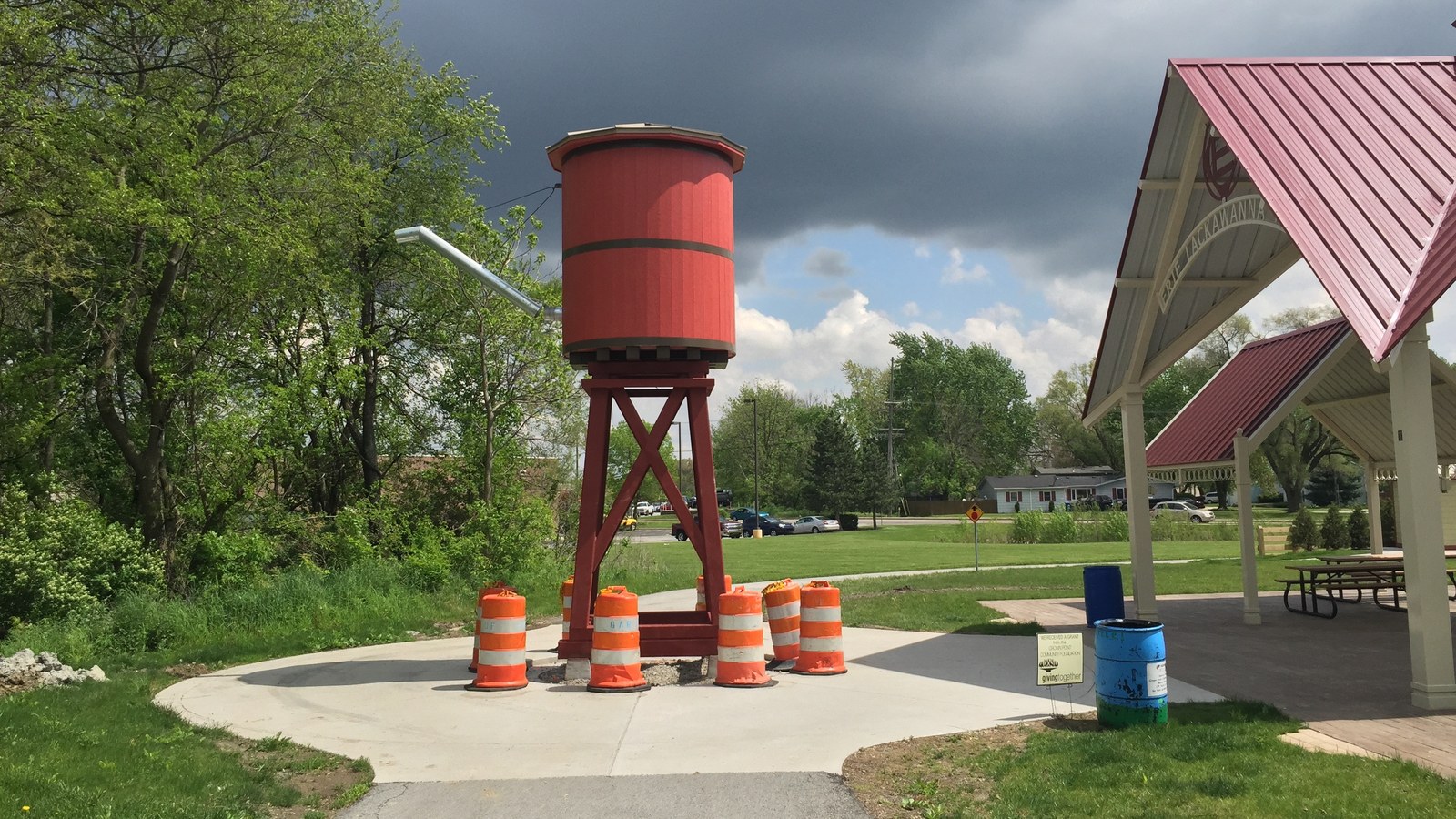
Assumable Mortgage in Crown Point: What Sellers Should Know
An assumable mortgage in Crown Point lets a qualified buyer take over…
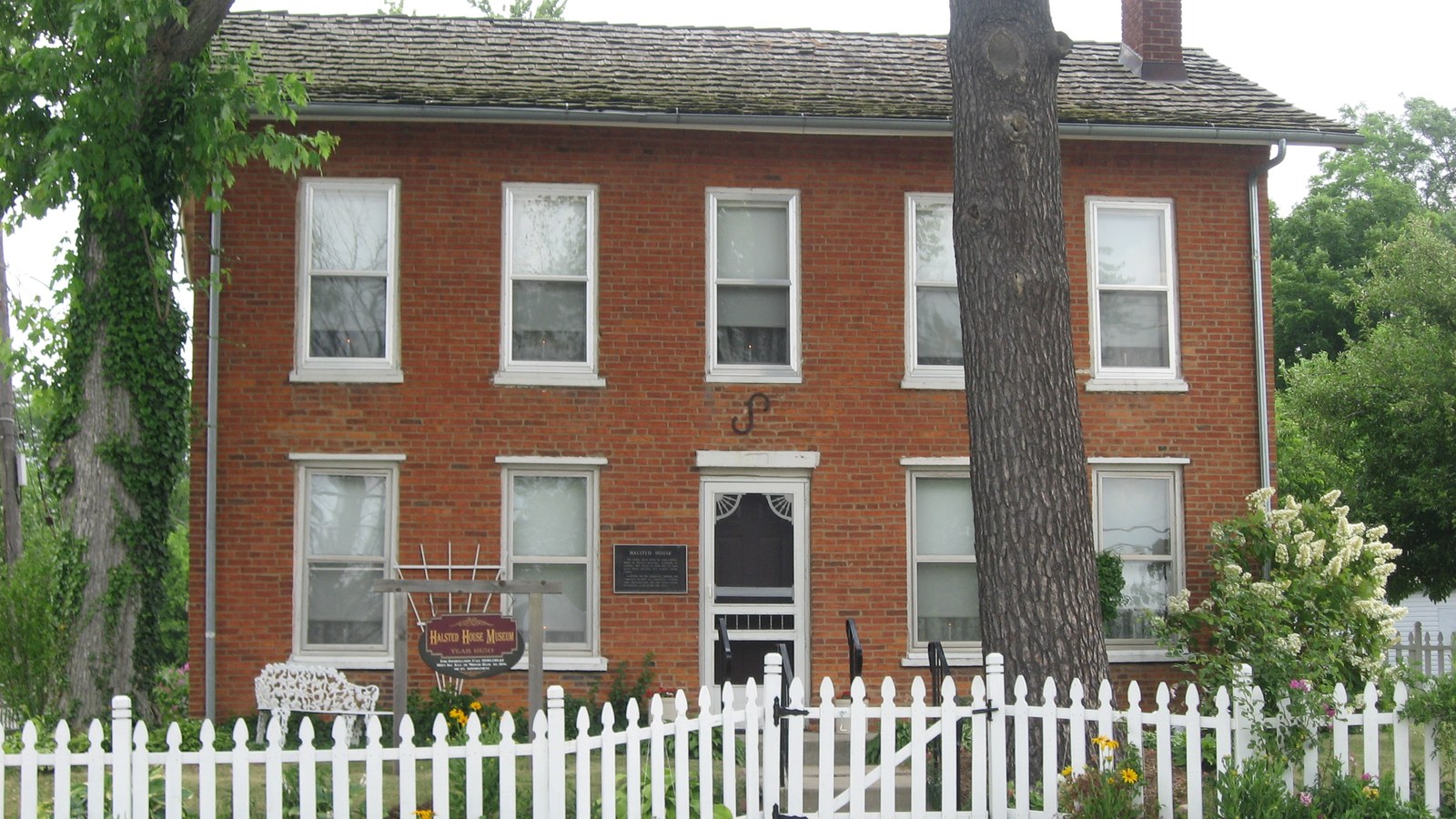
Termite Inspection in Crown Point: What Home Buyers Should Know
A termite inspection in Crown Point is a separate look at a…
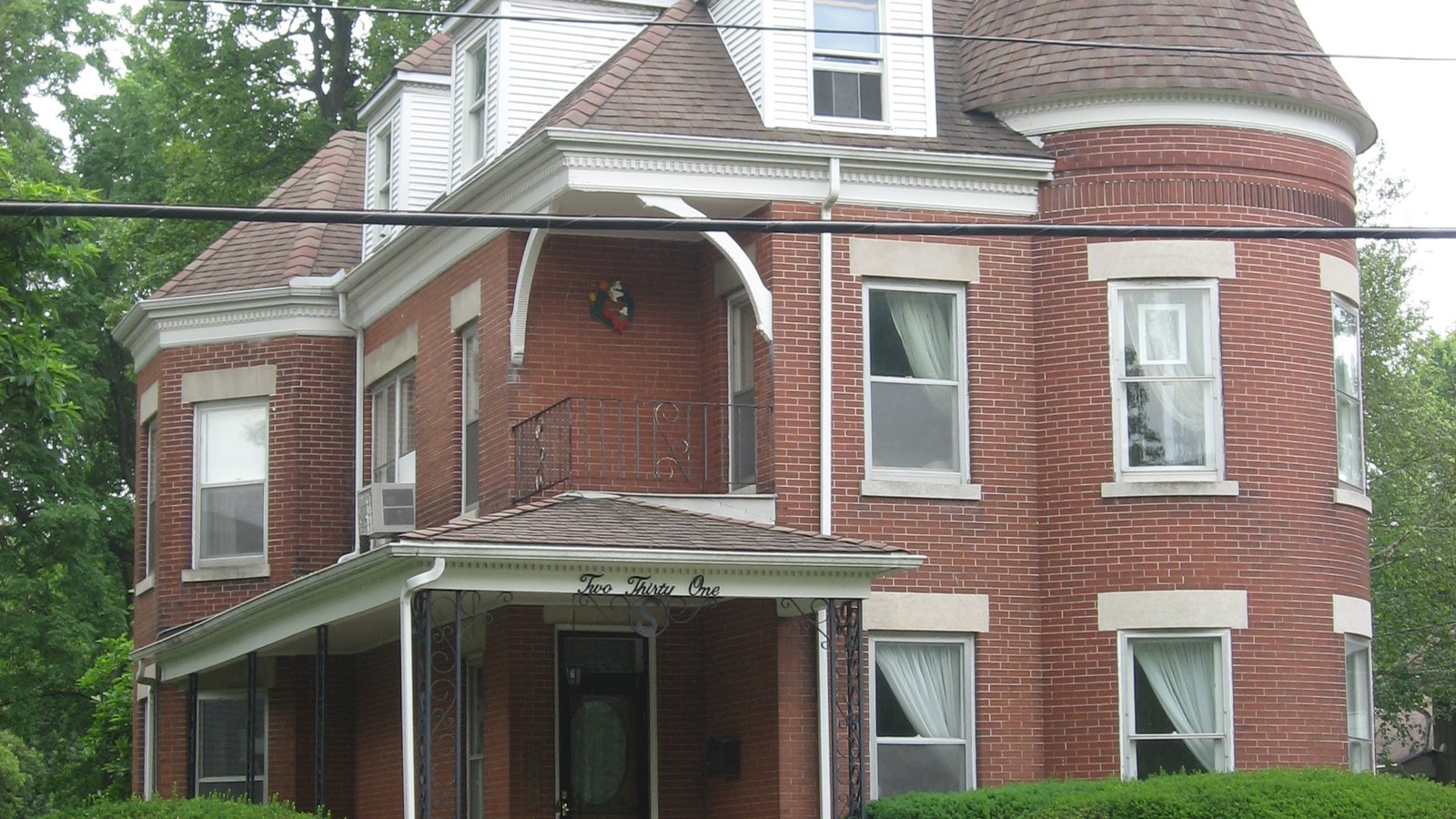
Mortgage Payoff When You Sell in Crown Point: What Sellers Should Know
For a mortgage payoff when you sell in Crown Point, the number…