

From Accepted Offer to Closing in Northwest Indiana
We’re the shop on South Main in Crown Point. Love Thy Neighbor. Call (219) 801-0432.
This page is Realest’s walk-through from accepted offer to closing in Northwest Indiana and the Illinois towns we work. Pam and Sash run that calendar from Suite B every week. No guaranteed close date. No viral “30-day” promise. A clear map of contingencies, inspection and appraisal windows, earnest money basics, title work, and what buyers vs sellers actually do between signature and keys.
Our office is at 112 S. Main St., Suite B, Crown Point, IN 46307. We represent buyers and sellers across Lake, Porter, and LaPorte counties, plus Homewood, Orland Park, Flossmoor, and Lansing when the Illinois side is in play. Start on Buy or Sell when you want representation. Soft-read Learn and Ask Realest for shorter shop answers while you map dates. This post is the offer-to-close calendar conversation.
The Suite B call that starts with “we’re under contract”
Someone called last week after their offer on a Crown Point ranch was accepted. They asked one question first: what happens now?
Pam did not hand them a cartoon timeline. She asked three things before anyone talked paint colors: when the inspection window ends, whether the lender already has a full file, and whether earnest money was already wired or still sitting in a draft email.
Sash’s line in that moment is simple. Acceptance is not closing. Acceptance starts a clock. Every date on that clock belongs to a person: buyer, seller, inspector, appraiser, lender, title. If one person stalls, the calendar moves. Your job is to know which dates are yours and which ones you only watch.
That is the shop habit. Crown Point, Munster, Valparaiso, Merrillville, Schererville, Dyer, Hobart, and the Illinois-line towns we work all get the same frame. Contract language gets written for your file. Not a national tip list.
If you are still choosing sequence before you write either offer, soft-read Buying and Selling at the Same Time. Loan product basics live here: Mortgage Types in Northwest Indiana. Sellers who want a DIY pre-list pass: Seller Home Inspection Checklist. Interviewing representation first: How to Interview a Realtor. Prep before photo day: What to Fix Before You List.
Crossing from Illinois into Indiana while a file is open? Soft-read Illinois to Indiana relocation on Real Estate USA, then call the shop for representation. Confirm the address fits the towns we work.
What “accepted” actually means here
An accepted offer means both sides signed a purchase agreement with deadlines. You are not done. You are inside a short season of work.
Most Northwest Indiana residential files move through the same beats. Exact days vary by contract and by board forms. Your Realtor should read your dates out loud before you celebrate.
1. Earnest money lands.
A good-faith deposit shows the seller you mean it. Amount and delivery deadline are in the contract. Wire carefully. Confirm the title or escrow instructions before you send money. Call the shop if the wire details feel off. We would rather slow a day than chase a fraud wire.
2. Inspection window opens.
Buyers schedule a home inspection (and often radon, sewer, or pest when the property calls for it). The clock is short. Miss it and you can lose room to negotiate repairs. Soft-read the seller DIY angle if you are listing soon: Seller Home Inspection Checklist. Buyers: book the inspector the day you go under contract, not the day before the deadline.
3. Repair or credit conversation.
Inspection findings become a request, a credit ask, a price change, or a walk-away under the contingency rules you signed. Not every crack is a crisis. Not every “as-is” listing means “ask nothing.” Your Realtor should prioritize health, safety, and big-ticket systems over cosmetic wish lists.
4. Appraisal and underwriting.
If you are financing, the lender orders an appraisal and underwrites the full file. Gaps in income docs, gift letters, or condo questionnaires show up here. Soft-read Mortgage Types if you are still choosing a product. Payment comfort still beats a clever rate tweet.
5. Title work and closing prep.
Title searches for liens, judgments, and ownership issues. Closing disclosures arrive. Wire instructions get verified again. Utilities, HOA letters, and keys get lined up. Sellers clear personal items and finish agreed repairs. Buyers confirm insurance and final cash to close.
6. Closing and possession.
Documents get signed. Funds clear. Keys transfer per the contract. Possession may be same day or after a short rent-back. Ask early. Do not discover possession language on closing morning.
Homes are searched on Realest.com. Search with the shop when you want a Realtor on the file from Suite B. Call (219) 801-0432 or email saso@realest.com.
The offer-to-closing checklist (run it the day you go under contract)
1. Print the dates.
Inspection end. Earnest due. Appraisal target. Closing date. Possession. Put them on one page. Share the page with your lender and your inspector. One calendar beats five text threads.
2. Wire earnest the right way.
Call title or the escrow contact using a known number. Do not trust a surprise email that “updates” wire instructions. If anything feels rushed or odd, pause and call Realest at (219) 801-0432.
3. Book inspection immediately.
Good inspectors fill up in Lake and Porter. Same-week slots vanish in busy seasons. Tell the inspector about known systems (older roof, sump, septic if rural) so the visit is useful.
4. Send lender everything early.
W-2s, pay stubs, bank statements, gift docs, divorce decrees if needed. Underwriting delays are often document delays. Your Realtor cannot invent a clear-to-close.
5. Decide repair philosophy before the report lands.
Buyers: what would make you walk? Sellers: what will you fix vs credit vs decline? Write it privately so the negotiation is calmer.
6. Confirm insurance and HOA early.
Older roofs, flood zones near lake and river pockets, and HOA rental caps can surprise people late. Ask in week one, not week four.
7. Plan the move and the cash.
Closing costs, moving truck, utility deposits, and a repair reserve after you own it. We do not invent average closing-cost percentages on this page. Ask the shop and your lender for file-specific numbers.
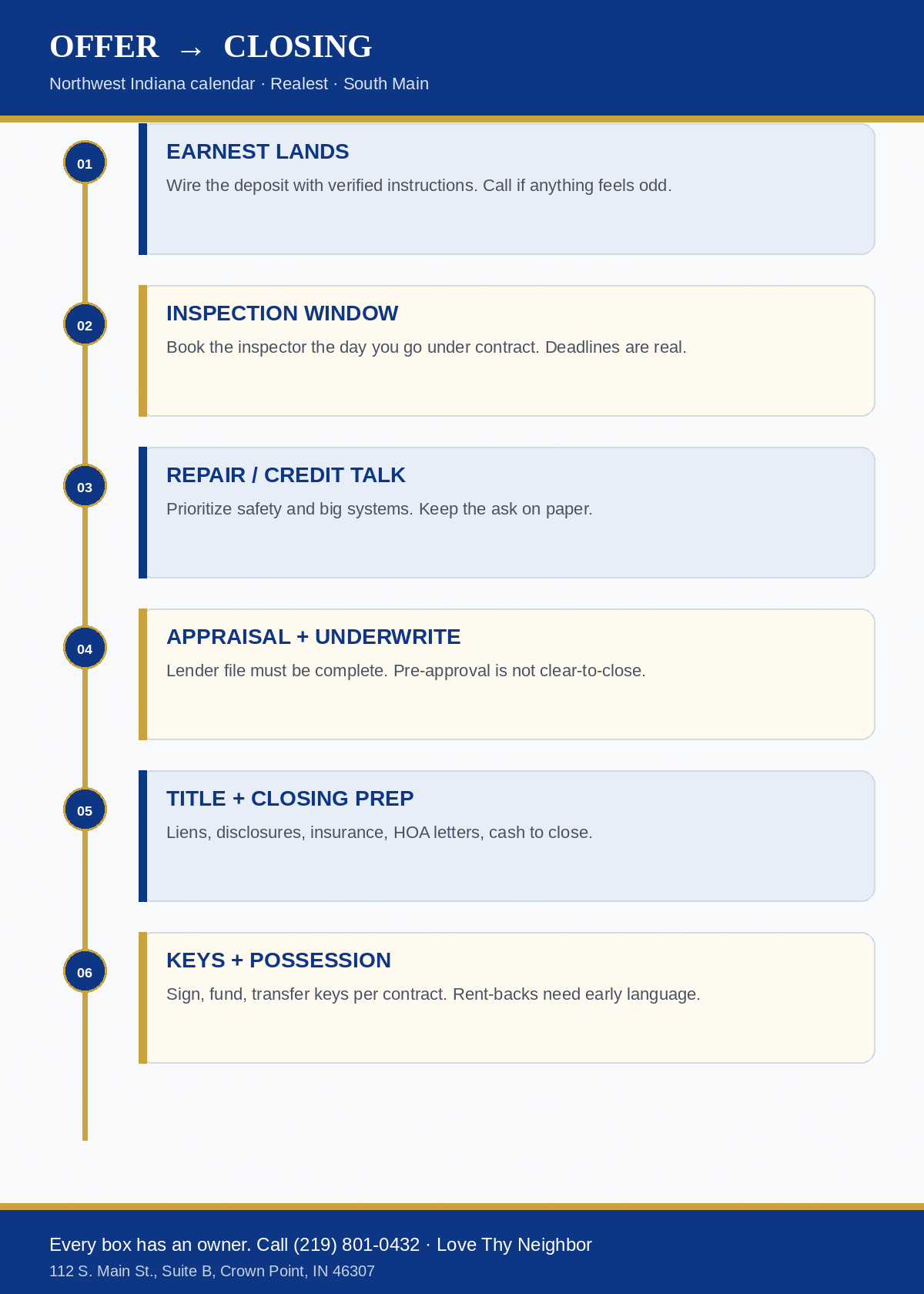
Offer-to-close map: earnest, inspection, repair talk, appraisal, title, keys. Every box has an owner.
What buyers do vs what sellers do
Buyers own: earnest delivery, inspection scheduling, repair requests within the window, lender document uploads, insurance binder, final walk-through, cash to close, and reading every disclosure before signing.
Sellers own: access for inspections and appraisal, agreed repairs or credits, clearing liens they can clear, HOA and utility cooperation, leaving the property per contract (broom-clean or as agreed), and showing up to closing with IDs and keys.
Both sides own: answering title questions fast, telling the truth on disclosures, and not ghosting their Realtor when a date slips.
If you are buying and selling in the same season, the calendars stack. Soft-read Buying and Selling at the Same Time so one file does not quietly break the other.
Honest tradeoffs (say them out loud)
Speed vs diligence.
A short inspection window can win a competitive offer. It also compresses the time to find a good inspector and read the report. Longer windows feel safer. Some sellers will not grant them. Match the window to the house age and your risk comfort, not to a viral number.
Repair ask vs relationship with the deal.
Asking for every cosmetic item can burn goodwill before appraisal. Asking for nothing when a furnace is failing is not brave. Prioritize. Your Realtor should help you rank.
Appraisal gap risk vs walking.
If value comes in low, you may bring cash, renegotiate, or exit under the financing contingency rules you signed. Do not assume the seller will drop price. Do not assume you must cover the gap. Run the numbers with your lender and the shop.
As-is listings vs “no negotiation.”
As-is often means the seller prefers not to do repairs. It does not always mean you cannot request a credit or walk under inspection terms. Read the form. Ask your Realtor what that listing’s language actually allows.
Illinois-to-Indiana timing.
Cross-border moves add title quirks, tax proration questions, and sometimes longer lender underwriting. Soft-read the USA relocation guide, then keep representation local to the file: Illinois to Indiana relocation.
Who this calendar fits (and who should slow down)
Fits people who:
already have a signed purchase agreement or are about to write one, want plain-English dates, can book an inspector fast, and will answer lender emails the same day.
Should slow down if:
you have not talked payment comfort with a lender yet, you cannot fund earnest without stressing rent, or you are still deciding whether to buy and sell in the same month without a Plan B. Soft-read Mortgage Types and call (219) 801-0432 before you fall in love with a closing date on a listing flyer.
Common stalls we see from Suite B
Inspector booked late.
The window is real. Start calling the day of acceptance.
Lender file incomplete.
A pre-approval letter is not a clear-to-close. Upload what they ask for once, cleanly.
Repair talks that sprawl.
Set a response deadline. Keep the ask on paper.
Wire fraud attempts.
Always verify instructions by phone using a number you already trust.
Possession surprises.
Rent-backs need early contract language. Moving trucks hate surprises.
Title issues discovered late.
Old judgments, missing signatures on prior deeds, or unpaid assessments. Title flags them. Speed of reply still matters. These are calendar failures, not moral ones. The shop’s job is to surface them early.
Soft doors while you wait on dates
Browse Buy or Sell for representation. Keep studying on Learn and Learn / Buying. Message the desk on Contact. Search live inventory at Search homes on Realest.com. Related shop reads already linked above: same-time buy/sell, mortgage types, seller inspection checklist, interviewing a Realtor, and what to fix before you list.
FAQ
How long does it take from accepted offer to closing in Northwest Indiana?
Many financed purchases land in a few weeks to about a month and a half, depending on the contract, appraisal, underwriting, and title. Cash files can move faster when inspection and title cooperate. We do not invent a county-wide average on this page. Ask the shop for a calendar that matches your lender and your address. Call (219) 801-0432.
What is earnest money and who holds it?
Earnest money is a good-faith deposit tied to your purchase agreement. A title company or escrow holder typically holds it per the contract. Amount and delivery deadline are written in the offer. Confirm wiring instructions by phone before you send funds.
What happens during the inspection contingency window?
You hire an inspector, receive a report, and decide whether to request repairs or credits, accept the property, or exit under the contingency rules you signed. Deadlines are strict. Book early. Your Realtor should help you prioritize safety and big systems over cosmetic noise.
What if the appraisal comes in low?
Options can include renegotiating price, bringing extra cash if you choose and can, challenging with better comps when the process allows, or exiting under financing contingency terms. None of those outcomes is automatic. Run numbers with your lender and your Realtor before you pick a path.
Do sellers still have work after an offer is accepted?
Yes. Sellers provide access, handle agreed repairs or credits, cooperate with title and HOA requests, and deliver the property as the contract requires. Acceptance is not a vacation until closing day.
How do I reach Realest about an under-contract file in Northwest Indiana?
Call (219) 801-0432 or visit 112 S. Main St., Suite B, Crown Point, IN 46307. Email saso@realest.com. Start on Buy, Sell, or Contact. Hours 9am-8pm daily. Love Thy Neighbor.
Talk to the shop
Realest – 112 S. Main St., Suite B, Crown Point, IN 46307
(219) 801-0432 · saso@realest.com
Hours 9am-8pm daily. Love Thy Neighbor
Related Posts

Home Inspections With Our Crown Point Shop
We're the shop on South Main in Crown Point. Love Thy Neighbor.…
Appraisal Gaps With Our Crown Point Shop
We're the shop on South Main in Crown Point. Love Thy Neighbor.…

Earnest Money With Our Crown Point Shop
We're the shop on South Main in Crown Point. Love Thy Neighbor.…